
| Ibn al Haytham - The First Scientist - Alhazen - Ibn al Haitham - Alhacen |

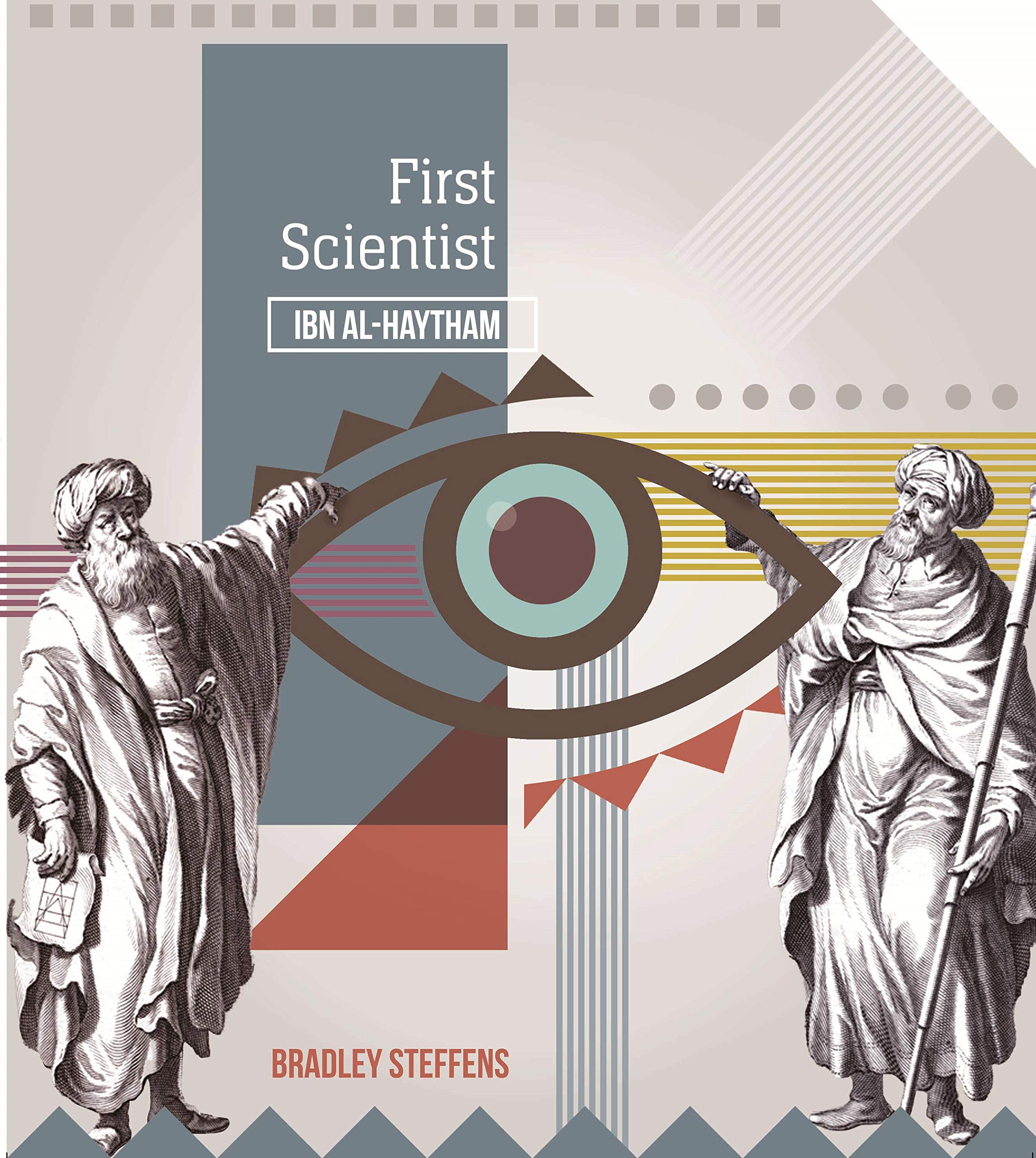
|
Ibn al Haytham - The First Scientist - Alhazen Biography
Known in the West as
Alhazen, Abu Ali al-Hasan ibn al- Hasan ibn al-Haytham was the
first person to test hypotheses with verifiable experiments. Some 200
years later, European scholars to began employing his methodology after reading
a Latin translation of his massive study of light and vision, Kitâb
al-Manâzir (The Book of Optics).
Born in Basra in 965,
Ibn al-Haytham first studied theology, trying unsuccessfully to resolve the
differences between the Shi'ah and Sunnah sects. Ibn al-Haytham then turned his
attention to the works of the ancient Greek philosophers and mathematicians,
including Euclid and Archimedes. He completed the fragmentary Conics by
Apollonius of Perga. Ibn al-Haytham was the first person to apply algebra to
geometry, founding the branch of mathematics known as analytic geometry.
In The Book of Optics, Ibn al-Haytham submitted every
hypothesis to a physical test or mathematical proof. For example, to test his
hypothesis that "lights and colors do not blend in the air," he
devised a camera obscura, observed what happened when light rays intersected at
its aperture, and recorded the results. Ibn al-Haytham continued to
systematically employ experiments, which he called “true demonstrations, throughout
his life.
Not only did Ibn
al-Haytham practice experimental science, but he also understood its
implications. He realized that the work of scholars—including himself—who
supported their theories with logic alone was fatally flawed. “We formerly
composed a treatise on optics in which we often followed persuasive methods of
reasoning,” Ibn al-Haytham wrote in the introduction of The Book of Optics, “but when true demonstrations relating to all
objects of vision occurred to us, we started afresh the composition of this
book. Whoever, therefore, comes upon the said treatise must know that it should
be discarded.”
Ibn al-Haytham conducted
many of his experiments investigating the properties of light during a ten-year
period when he was stripped of his possessions and imprisoned as a
madman in Cairo. How Ibn al-Haytham came to be in Egypt, why he
was judged insane, and how his discoveries launched the scientific
revolution are just some of the questions Bradley Steffens answers in First
Scientist: Ibn Al-Haytham, the world's first biography of
the Muslim polymath.
Jim Al-Khalili, author
of The House of Wisdom: How Arabic
Science Saved Ancient Knowledge and Gave Us the Renaissance, praises First
Scientist: Ibn al-Haytham, writing:
This new coffee table edition of Steffens’s biography of Ibn
al-Haytham is a thing of beauty, with stunning photographs and illustrations adding to the
scholarly yet accessible biographical text. Ibn al-Haytham is rightly regarded
as one of the greatest scientists in history and should be a household name
everywhere in the world. The fact that he led such a colourful life is a
delightful bonus. I will be recommending this book to everyone I know, and even
those I don’t.
Nuh Aydin, a professor
of mathematics at Kenyon College in Gambier, Ohio, also praises Steffens’
groundbreaking work. He writes:
Bradley Steffens’s
engaging style makes the life and works of one of the greatest scholars in
history accessible to the modern audience. It is an excellent introduction to
not only a great mind in human history whose discoveries a millennium ago
continue to benefit us in the modern world, but also the larger field of
history of Islamic mathematics and science. The fascinating story of a remarkable polymath in this captivating book
will make you finish it in one sitting and want to keep it nearby for easy
reference.
Midwest
Book Review calls First
Scientist: Ibn al-Haytham a "fine blend of history and science
biography." Booklist concurs, praising the book as a "clearly
written introduction to Ibn al-Haytham, his society, and his
contributions." Kirkus Reviews touts First Scientist:
Ibn al-Haytham as "an illuminating narrative...of a
devout, brilliant polymath." Children's Literature comments,
"Steffens deftly weaves an overview of Islamic history into this
biography. Writing for The Fountain, Dr. Ertan Salik adds:
"I congratulate Bradley Steffens for his beautiful work about Ibn
al-Haytham and his advancement of experimental science." Writing
for the Journal of the Islamic Medical Association of North America,
Dr. Husain F Nagamia obvserves, "Steffens has the unique ability of a
storyteller that makes the reading of his book as interesting as a spy
thriller, unfolding the events in Ibn al-Haytham’s life like the clues
being discovered by a forensic detective."
Critics are not the only ones
praising First Scientist: Ibn al-Haytham; casual readers are
lauding it as well. In a 5-star Amazon.com review, Haitham Hamad called it a
"fantastic book, written in a brilliant manner." In another
5-star Amazon.com review entitled "Little
Book - Big Message," Brian Francis Neary
wrote, "First Scientist" is entertaining, educational and
inspiring. A great read." Abdul Jabbar Al-Shammari, the director
of the Ibn al- Haitham Center for Science and Technology in Amman,
Jordan, writes: "I enjoyed reading about the events in the life of
the first scientist, Ibn al- Haitham. I congratulate Bradley Steffens on
writing a fantastic and accurate book.” The blog Skulls in the Stars comments: "Steffens has written a wonderfully
clear and concise account of al-Haytham’s life and work." A. Nor of
Ohio adds, "I find the book interesting, for it accords and recognizes a
Muslim scientist his proper place as the first scientist who is
responsible for advocating experimental work in verifying conceived scientific
ideas (hypotheses)." And Reformistan blogger Usman
Mirza, of Karachi, Pakistan, writes, "As Muslims, we are subject of
taunts for our ‘backwardness’ and lack of secular, scientific achievements. I
encourage readers to read a book on the 'first scientist', a Muslim in Islam’s
golden age. It is a nicely written biography of Ibn al-Haytham by
a westerner, Bradley Steffens. He has written about a
neglected subject that needs to be read by all."
To read a sample chapter of First Scientist: Ibn Al-Haytham click here.


Sponsored by: Life Insurance LeadsCopyright © 2008 by Bradley Steffens